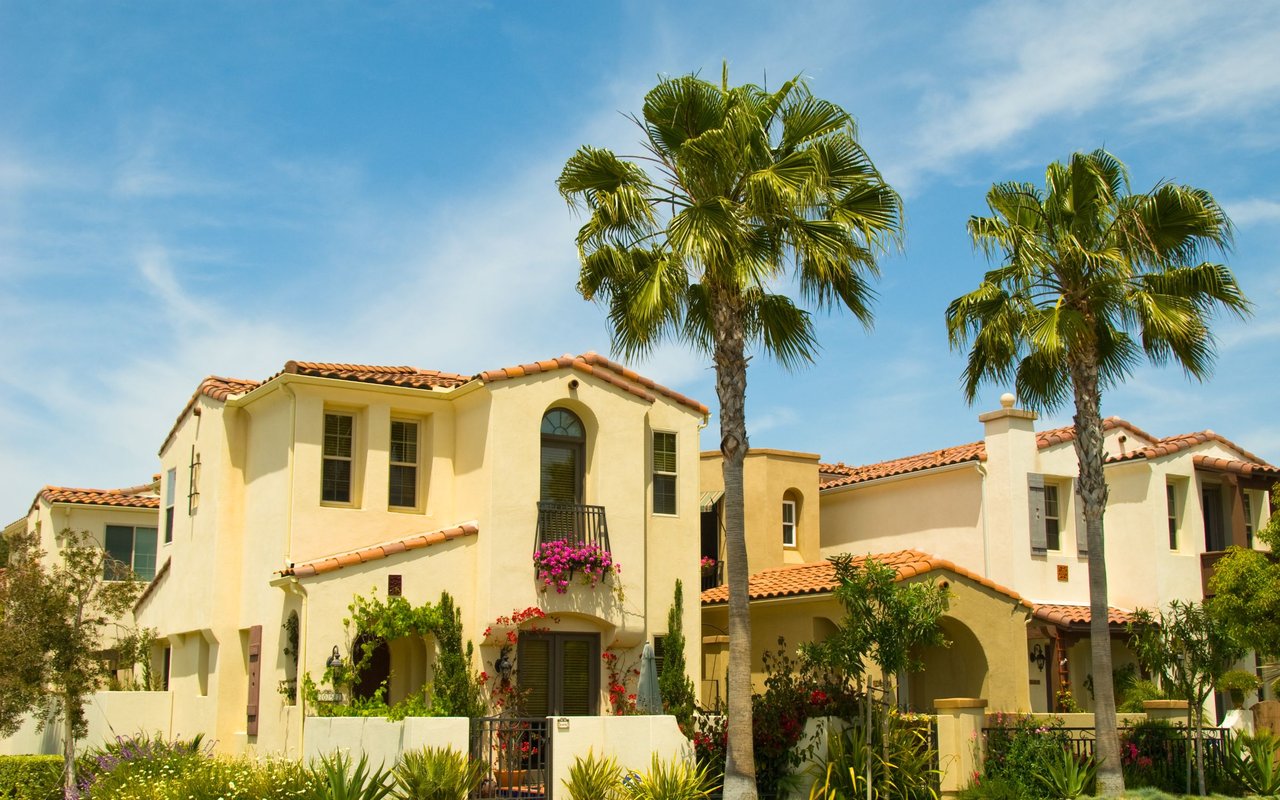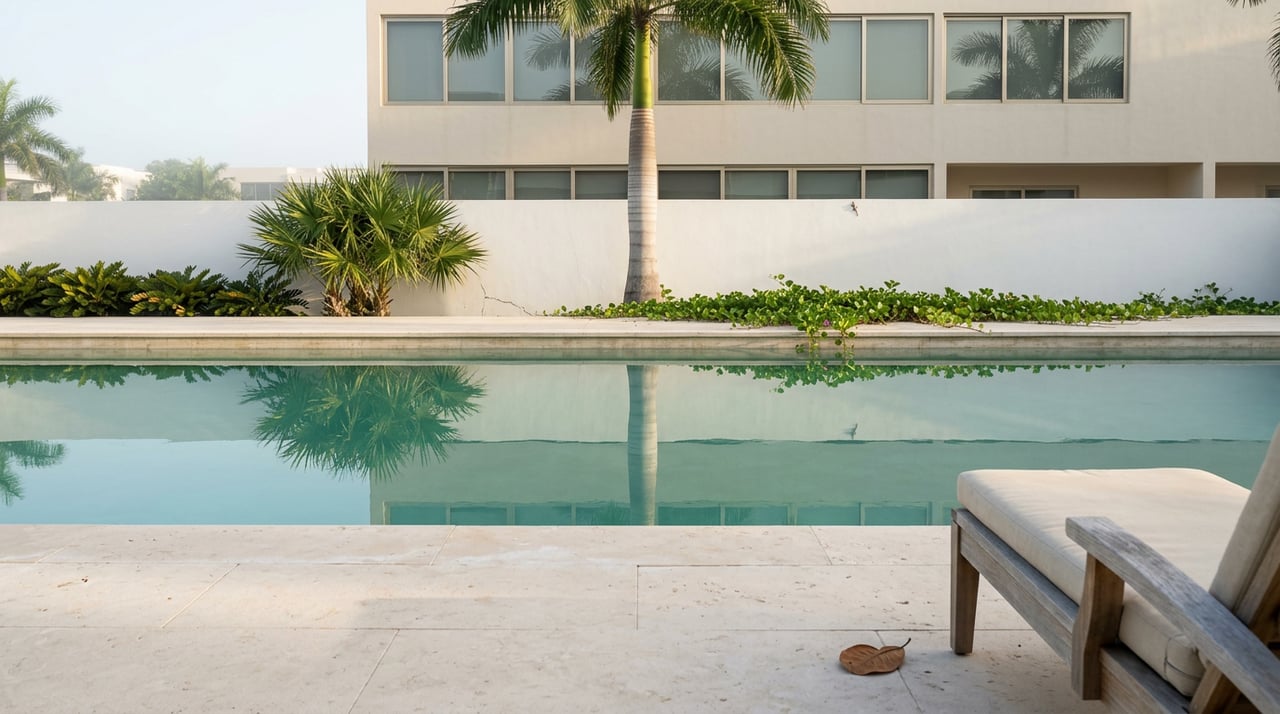
Ask anyone in Costa Dorada where they're headed on a Saturday morning and the answer is almost always the same: Sardinera. They pack the cooler, load the car, and join the line of neighbors funneling toward Carretera 697, all bound for the same public lot. Meanwhile, the calm, man-made tidal pool sitting right next to the Embassy Suites by Hilton, inside the neighborhood itself, sits half empty.
That's the part worth sitting with. Costa Dorada isn't short on water. It has a protected swimming area built specifically to be gentle, right at the doorstep. The habit of driving past it isn't about better water somewhere else. It's about matching the right pool to the right morning, and most people are making that call on autopilot instead of on purpose.
Two different kinds of water, minutes apart
The tidal pool inside Costa Dorada exists because someone decided the open Atlantic wasn't the right fit for every swimmer. Its man-made barrier keeps the water still, which is exactly why it works for kids splashing before breakfast or grandparents who want to float without fighting current. There's no lifeguard schedule to check and no seasonal gate hours to plan around. You walk out, you're in the water.
Sardinera, officially Balneario Manuel "Nolo" Morales, is a different animal entirely. It's a government-run public beach with real surf, a rock jetty separating the swimming side from the rougher side, and a full slate of services: lifeguards, showers, food concessions, water quality monitoring through Puerto Rico's official beach program. That last part isn't marketing language. The site is tracked by the Puerto Rico Environmental Quality Board's beach monitoring program, which keeps ongoing water quality records for the location.
Here's the side-by-side most people never actually run through before deciding where to point the car:
| Costa Dorada tidal pool | Sardinera (Balneario Nolo Morales) | Ojo del Buey | |
|---|---|---|---|
| Distance from Costa Dorada | On-site | A short drive along Carr. 697 | A further short drive, off Calle 13 in Barrio Mameyal |
| Water | Calm, barrier-protected | Open surf, roped swim zone | Small natural bay, rocky |
| Facilities | None needed | Lifeguards, showers, food | None |
| Cost | Free | Small per-vehicle fee during staffed hours | Free |
| Best for | Toddlers, early mornings, no-plan swims | Bigger water, a full beach day, food on site | A slower walk, photos, history |
That table is the whole argument in miniature. Three options, three completely different jobs. The mistake isn't picking Sardinera. It's picking it by default when the morning actually called for the pool right at the doorstep, or skipping Ojo del Buey entirely because nobody mentioned it's an option at all.
What the balneario actually costs you in time
Sardinera runs on a public schedule, and that schedule changes with the season. Through the peak stretch, roughly May into August, the beach stays open daily from 8:30 in the morning to 6 at night, which means right now, in mid-August, every day is a beach day if you get there early enough. Once the season shifts into fall and winter, the facility trims down to Wednesday through Sunday.
Early is doing a lot of work in that sentence. The main lot fills by late morning on Saturdays and Sundays, and the practical advice locals pass along is to arrive before 10 a.m. if you want to park close instead of walking in from the street. Weekdays run noticeably quieter, which is worth remembering if your schedule has any flexibility at all. A small per-vehicle fee applies during staffed hours, the kind of detail nobody minds paying but everybody forgets to bring cash for.
None of that friction exists at the tidal pool. No gate hours, no lot to fill, no fee. The tradeoff is real, too: no lifeguard, no food truck, no showers to rinse off in. Sardinera earns its crowd. The point is just noticing you're choosing between two different transactions, not one beach versus a lesser version of itself.
The bay most people drive right past
A few minutes further, off Calle 13 in Barrio Mameyal, the road ends at an archway with a short walk down to a small bay. This is Ojo del Buey, named for a rock formation at the water's edge that's been carved by wind and waves into something that genuinely resembles the head of an ox.
Local legend ties the spot to Roberto Cofresí, the Puerto Rican privateer whose name still gets attached to hidden treasure stories up and down the north coast. Whether or not anything was ever buried here, the story has stuck around long enough that it's part of how people talk about the place.
The history isn't just folklore. An archaeological dig at the site in 1984 turned up pottery fragments, tools, and the remains of a young woman from the pre-Taíno Ostionoid period, all of it now held at the Museo de Arte e Historia de Dorado just off the town plaza, open Monday through Saturday. It's the option that gets the least attention of the three because it doesn't come with a parking lot or a sign, just a short walk and a story worth knowing before you get there.
Where the day actually ends
The water decision only sets up the second half of the day, and that part of the routine has real staying power in Dorado. El Ladrillo has been running long enough, and consistently enough, that Puerto Rico's Tourism Company designated it a mesón gastronómico, an official recognition reserved for restaurants that represent the island's culinary tradition at a sustained level. It's been sharpening its version of that tradition for something like three decades, built around prime meats and fresh seafood in a dining room that leans into exposed brick and low light rather than resort polish.
A few minutes away, La Terraza has built its name on mofongo served the traditional way, packed into a wooden pilón at the table, alongside a whole fried red snapper that regulars order specifically because it's the version they grew up with. For something more casual, El Carretón de Lola has earned a nickname of its own around town, the house of the stuffed arañota, a deep-fried shredded plantain patty stuffed with anything from shrimp to conch to pork. Metropol and Katrina's round out the rotation for nights when nobody wants to decide and everyone just wants a table.
Dorado's town plaza also keeps a standing monthly date worth building a weekend around: Noche de Paraiso, a first-Friday gathering with live music that turns the plaza into the kind of shared space a beach town doesn't always bother maintaining. It's the version of the weekend that has nothing to do with sand at all, and for residents who've already done the pool-versus-balneario math earlier in the day, it's the natural place to end up.
The actual takeaway
None of this is really about which beach wins. It's about noticing that Costa Dorada already gives you three distinct answers to "where should we swim today," and most mornings get decided by habit instead of by what the day actually needs. A toddler who wants to splash before nine doesn't need a lifeguard or a parking fee. A group that wants a full beach day with food on site should be leaving before the lot fills. And a slower Sunday with nowhere to be is exactly what Ojo del Buey is sitting there for, quietly, at the end of Calle 13, mostly ignored.
If you're weighing what any of this means for the buying side of Costa Dorada, we've already mapped the building-by-building differences in beach access and HOA rules across the community in a separate guide. For everything else, from a Tuesday morning swim to figuring out which pilón makes the better mofongo, that's the kind of local detail Unique Properties Realty PSC tends to already have an opinion on. Connect with Dorado's local specialists whenever you're ready to talk about more than the weekend.